
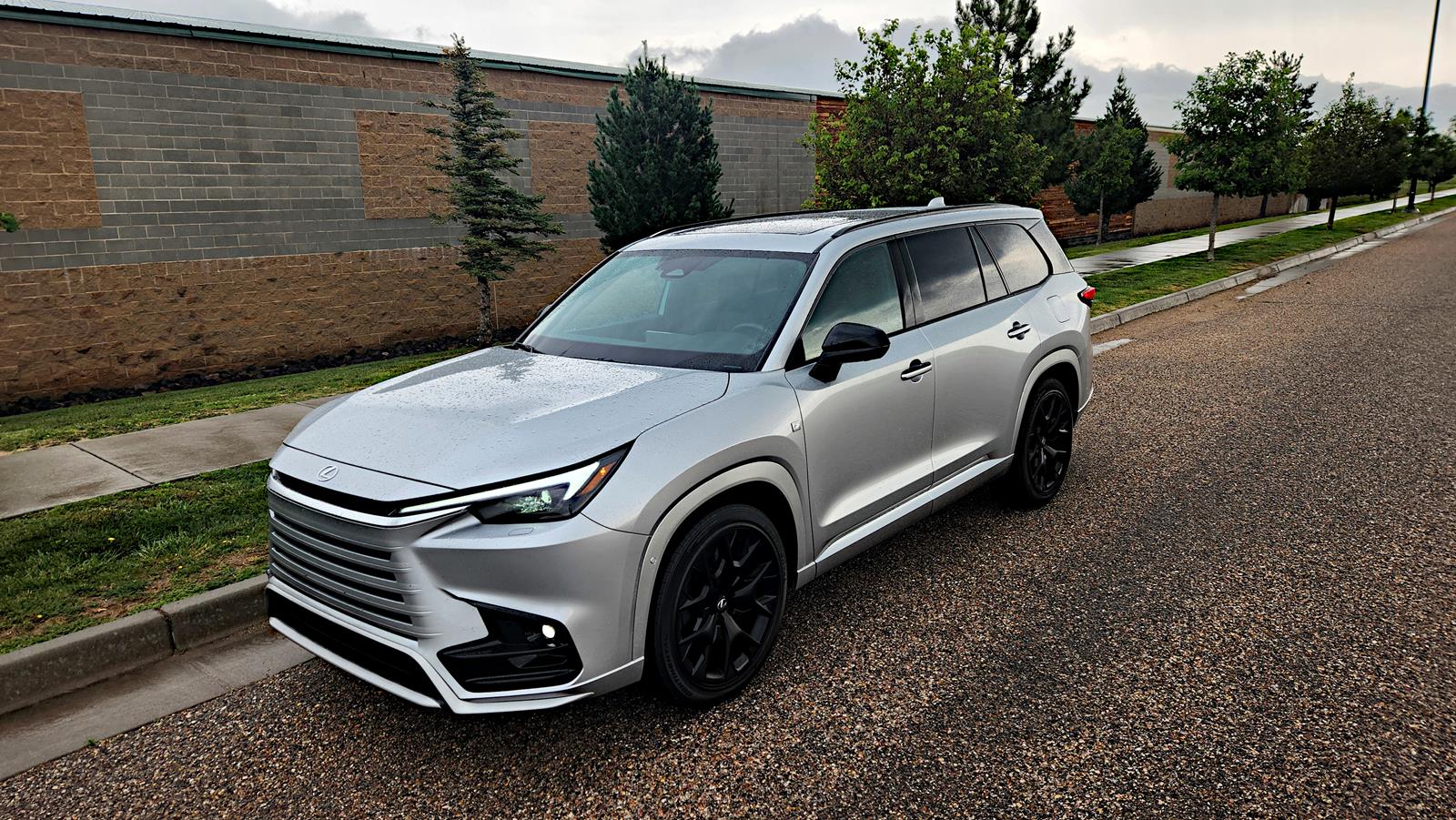
The new 2025 Lexus TX is Lexus’s statement in the large three-row luxury SUV category: it wants to combine the luxurious refinement the brand is known for with modern tech and serious practicality. It succeeds for the most part, but you’ll have to decide which compromises are acceptable.
One of the strongest selling points of the TX is the range of powertrains. You get the base TX 350 with a 2.4-L turbocharged four-cylinder (275 hp, 317 lb-ft torque) in front-wheel or all-wheel drive. That’s the focus of this review. There’s also the TX 500h hybrid (turbo four + electric motors, 366 hp) with Lexus’s DIRECT4 AWD system and the top model TX 550h+ plug-in hybrid, combining a 3.5-L V6 + electric motors for about 404 hp.
This range of models gives buyers options: pure gas if you don’t want the premium cost of hybrids or hybrids if you do and want lower running costs. Lexus seems serious about balancing performance and efficiency.
On the comfort side, the TX delivers. Lexus fans and owners of other models probably won’t recognize the interior of the TX. It’s more austere and less ensconced than with other Lexus models. The platform (GA-K) helps with weight distribution and noise/vibration isolation, and there are standard luxury touches. The third row is usable (which in this segment is not always the case), and cargo space ramps up nicely when you fold rows down: 20.2 cubic feet behind the third row, 57.4 with it folded, and up to about 97 cubic feet with both second and third rows down.
Inside you get a 14-inch infotainment screen, a standard 12.3-inch driver display, wireless Apple CarPlay / Android Auto, lots of USB-C ports, ambient lighting, etc. For many buyers, this feels more than sufficient for what a large SUV should offer. Just not, perhaps, a luxury-branded one.
The TX still has its large-SUV mass, so physics are going to happen. Handling is competent, but it doesn’t magically feel nimble. For drivers used to more agile crossovers, there will be trade-offs: in cornering, in responsiveness, in that “light-on-its-feet” feel. The lighter turbo four vs larger powertrains help, but the bulk remains.
Because of the number of trims, powertrains, and optional packages, pricing can escalate quickly. Optional tech, luxury touches, hybrid / plug-in hybrid powertrains.. they add up. For some buyers, the delta between a well-equipped TX and a fully loaded one may feel steep. Also, some features are subscription-based (e.g. cloud navigation, voice assistant features, etc.). That adds complexity in ownership, to put it nicely.
If I were advising someone considering the 2025 Lexus TX, I’d say this: it’s a very strong choice for families or anyone wanting three rows of luxury, modern tech, good space, and some hybrid-electric options. It leans more toward comfort and refinement than track-day or sports car ambitions, but that’s Lexus.
If your priorities are:
- maximum on-road comfort and quietness,
- lots of utility (cargo & seating),
- luxury touches without needing exotic performance,
..then the TX hits a sweet spot.
On the other hand, if you want the last word in sporty handling, or are extremely discerning about audio/audio-quality and interior textures, or price versus luxury, then this probably isn’t your best option. The strongest competitor to the Lexus TX, in terms of price and luxury, is the Toyota Grand Highlander. They’re almost identical in most respects and the Grand Highlander can be had for less money.
If your priorities are maximum on-road comfort and quietness, lots of utility (cargo & seating), and luxury touches without needing exotic performance, then the TX hits a sweet spot.


This review first appeared on CarNewsCafe.com.


