
There are a few things in life that will get people arguing faster than a politician at a family reunion. Pineapple on pizza. Whether the mullet is ever coming back into fashion. And if an electric SUV deserves to wear the Mustang badge.
Ford has been dealing with that last one since the Mustang Mach-E arrived for the 2021 model year. Five years later, the Mach-E is still here, still electric, and still capable of making traditional Mustang fans clutch their V8-powered pearls.
And you know what? They should probably take a breath.
The Mach-E isn’t a Mustang in the traditional sense. It has four doors, a hatchback, a reasonably practical interior, and no thunderous V8 to announce its arrival three counties away. Instead, it offers instant torque, useful driving range, respectable handling, and enough acceleration to make some gasoline-powered performance cars nevous.
It’s also a genuinely good electric crossover. The trick is deciding whether that’s enough to justify the name on the tailgate.
Styling: Mustang-ish, Without the Horsepower-Scented Nostalgia
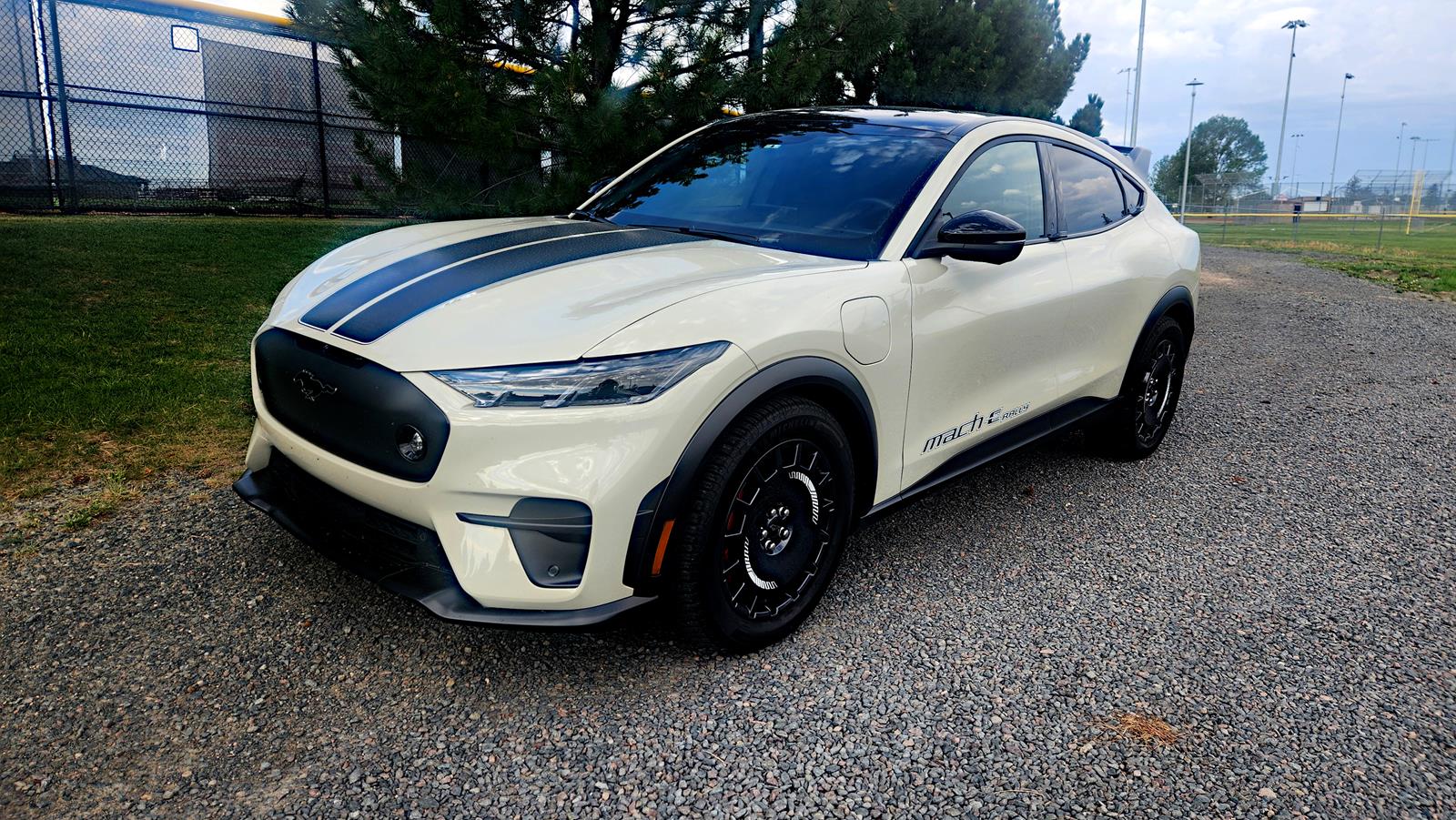
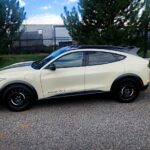
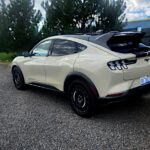
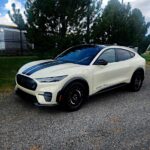
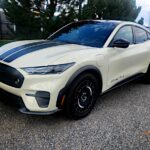
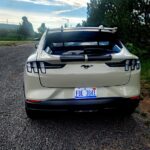
The Mustang Mach-E wears its family resemblance reasonably well. The long hood, swept-back headlights, muscular rear haunches, and tri-bar taillights give it enough Mustang DNA to make the connection believable. The overall shape is more crossover than coupe, naturally, but Ford has done a decent job of making the proportions work.
It’s a handsome machine, particularly in the sportier configurations. Unlike some electric vehicles that look as if their designers were instructed to make them resemble a doorstop from the future, the Mach-E has actual visual character.
The front end is particularly clean, thanks to the absence of a traditional grille. There’s no engine radiator demanding a large opening, so Ford can let the bodywork do the talking. The result is modern without looking like a spaceship.
The proportions also help conceal the fact that this is a practical family vehicle rather than a traditional sports car. It doesn’t have the low roofline or long, dramatic hood of the regular Mustang, but it also doesn’t look like a conventional grocery-getter.
Of course, calling it a Mustang remains controversial. But Ford has made its decision, and the company’s marketing department isn’t about to surrender a recognizable nameplate simply because some enthusiasts believe all Mustangs must consume gasoline and have only two doors.
Powertrain: Quietly Quick, Occasionally Ridiculous
The 2026 Mach-E lineup offers several combinations of electric motors, battery sizes, and drivetrains. The Select and Premium models are available with rear-wheel drive or electric all-wheel drive, while the GT and Rally models receive dual-motor all-wheel drive.
The standard-range battery provides 73 kWh of usable capacity, while extended-range versions of the Select and Premium use an 88-kWh pack. The GT and Rally step up to a 91-kWh battery.
Power starts at 264 horsepower in the standard-range, rear-wheel-drive models. Extended-range rear-wheel-drive versions produce 272 horsepower, while all-wheel-drive Select and Premium models deliver 325 or 370 horsepower, depending on configuration.
That’s a reasonably broad spread, but things get more interesting when the GT enters the conversation.
The GT produces 480 horsepower and 600 lb-ft of torque. Add the GT Performance Upgrade, and torque climbs to 700 lb-ft. The Rally also produces 480 horsepower and 700 lb-ft, combining the GT’s muscle with hardware intended for more enthusiastic driving away from smooth pavement.
Ford estimates that the quickest configurations can reach 60 mph in approximately 3.3 seconds. That’s genuinely quick, regardless of what badge happens to be attached to the vehicle. In the real world, of course, this can vary. In the GT model I have been in the 3.5 range and in the Rally closer to 4.
The basic versions are less interested in embarrassing sports cars at stoplights. They provide smooth, predictable acceleration and enough immediate torque to make merging and passing effortless. Even if they do still embarrass most sports cars when pressed.
That’s the beauty of an electric powertrain. There’s no waiting for a transmission to select the appropriate gear, no turbocharger building boost, and no engine revving toward some theoretical sweet spot. Press the accelerator and the motors respond.
The downside is that acceleration can become a little anticlimactic once the initial novelty wears off. A powerful electric vehicle can deliver extraordinary speed without delivering much drama. The Mach-E GT is fast enough to entertain, but it can’t reproduce the mechanical opera of a V8 Mustang.
Driving Dynamics: More Than a Straight-Line Party Trick
The Mach-E’s handling is one of its more convincing arguments for the Mustang name.
The battery pack sits low in the chassis, helping lower the center of gravity. That gives the vehicle a planted feeling through corners and helps it avoid the top-heavy sensation that can afflict taller crossovers.
Steering is responsive enough for everyday driving, and the suspension generally balances comfort with body control. The standard models prioritize smoothness and usability, while the more powerful versions deliver a more engaging driving experience.
No, the Mach-E isn’t a lightweight sports car. Depending on configuration, it carries well over two tons of automotive ambition. Physics remains stubborn and the battery pack doesn’t magically disappear when the road gets twisty.
Nevertheless, the Mach-E feels composed, and its low-mounted battery helps it behave more confidently than its size might suggest.
The GT adds performance hardware to support its additional power, including Brembo front brakes. The Rally takes a different approach, adding a rallycross-tuned suspension with MagneRide dampers and Michelin CrossClimate2 tires.
The Rally is particularly interesting because it acknowledges that performance doesn’t always happen on a perfectly paved road. Its extra ride height and specialized suspension make it better suited to loose surfaces and rougher routes than the standard GT.
Naturally, this isn’t a replacement for a dedicated off-road vehicle. Nobody should expect it to crawl over boulders like a Bronco or a Wrangler. But the Rally gives the Mach-E a little more personality than simply being the electric crossover that gets to the next stoplight first.
Range and Charging: The Important Numbers
Range is where the Mach-E becomes a more serious everyday proposition.
According to Ford’s published specifications, the 2026 lineup offers EPA-estimated ranges of up to 320 miles per charge, depending on battery size, drivetrain, and trim.
The standard-range rear-wheel-drive models are rated for approximately 260 miles, while standard-range all-wheel-drive versions manage about 240 miles. The extended-range battery increases those figures to as much as 320 miles with rear-wheel drive or 300 miles with all-wheel drive. The GT is rated for approximately 280 miles, while the Rally sacrifices some efficiency for its performance-oriented hardware and is rated for about 255 miles.
As usual, I will caution that in the real world, ranges are about 20 percent less than advertised, on average. This is true of most every EV I’ve ever been in. Add in a heavier highway mix and those ranges get even lower.
Those figures still make the Mach-E competitive in the electric crossover market. They also illustrate an important reality of electric performance: more power, additional driven wheels, and stickier tires generally mean less distance between charging stops.
The Mach-E supports DC fast charging, with peak charging rates of up to 115 kW for standard-range models and 150 kW for extended-range versions. Actual charging speeds vary with battery temperature, state of charge, and the capabilities of the charging station.
Those rates aren’t class-leading in today’s market, but they aren’t deal breakers.
Still, charging compatibility has improved the vehicle’s long-distance usefulness. With the appropriate adapter, owners can access compatible Tesla Supercharger stations, expanding their options beyond the traditional public charging networks.
For daily use, home charging remains the easiest solution. Plug in overnight, and the vehicle is ready for another day without a trip to a gas station.
That convenience is difficult to appreciate fully until you’ve experienced it. Of course, it assumes you have somewhere to install a home charger. Apartment dwellers and people who rely entirely on public charging face a different set of compromises.
Electric vehicles are excellent at eliminating routine fuel stops. They are less magical when the nearest functioning fast charger is 30 miles away and occupied by somebody charging to 100 percent while watching videos.
Interior: Sensibly Modern, With a Few Screen-Related Compromises
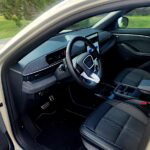
Inside, the Mach-E follows the now-familiar electric-vehicle formula: a relatively uncluttered dashboard, digital instrumentation, and a large central touchscreen.
The 2026 model features a 10.2-inch driver display and a 15.5-inch central touchscreen. Wireless Apple CarPlay and Android Auto compatibility help make the infotainment system useful without forcing owners to abandon their preferred smartphone interfaces.
The cabin has a modern appearance, and the seating position provides a useful balance between the higher view associated with an SUV and the more carlike driving position of a traditional Mustang.
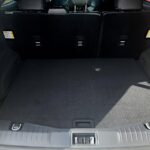
There’s room for five occupants, although the rear seat is naturally more comfortable with two adults rather than three. The cargo area provides approximately 29 cubic feet behind the rear seats, depending on measurement conventions and configuration, with substantially more room available when those seats are folded.
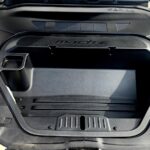
A front trunk provides additional storage on equipped models, although Ford has made it an optional feature on the 2026 Select rather than standard equipment.
That last detail is worth noting. A front trunk is one of the practical benefits of an electric platform, and making it optional on the entry-level model feels like an unnecessary way to complicate an otherwise useful feature.
Higher trims improve the experience with additional comfort equipment. The Premium includes heated and ventilated front seats and a Bang & Olufsen audio system, while the GT adds performance-oriented seating and hardware.
The large touchscreen looks impressive, but it also means that many vehicle functions are handled through menus rather than physical controls. This is the modern automotive industry’s favorite solution to a problem nobody asked it to solve.
A screen can be useful for navigation, vehicle settings, and multimedia. It’s less useful when a driver needs to adjust a frequently used function and must first determine which digital submenu the automaker has decided to hide it in.
Ford’s interface is reasonably straightforward, but the general principle still applies: fewer buttons don’t automatically mean better ergonomics.
Technology and Safety: Useful, With a Subscription Asterisk
The Mach-E offers a healthy collection of driver-assistance and convenience technologies, including available Ford BlueCruise hands-free highway driving.
BlueCruise can reduce the workload on compatible highways by managing steering, acceleration, and braking under appropriate conditions. It is a driver-assistance system, not autonomous driving, so the driver must remain attentive and ready to take control.
Availability depends on the vehicle’s equipment and applicable package or subscription arrangements. Buyers should confirm the current terms rather than assume every Mach-E comes with unlimited hands-free driving.
The vehicle also offers familiar modern conveniences such as phone-as-a-key functionality and connected services.
These features can make the Mach-E feel thoroughly contemporary, but they also reinforce a growing automotive industry habit: selling a vehicle with capable hardware, then attaching ongoing fees to selected software features.
It’s a bit like buying a refrigerator and discovering that the ice dispenser requires a monthly subscription.
Pricing and Value: The Sweet Spot Is in the Middle
Ford lists the 2026 Mustang Mach-E Select at a starting MSRP of $37,795, before applicable taxes, registration, delivery, and other charges. The Premium starts at $40,595, while the GT begins at $53,395 and the Rally at $57,690.
Actual pricing depends on equipment, dealer inventory, and any available incentives. Most likely, your Mach-E will be cheaper than advertised given today’s EV market.
The Select makes the most sense for buyers who want an electric crossover without paying for performance they won’t regularly use. It provides useful range, good everyday acceleration, and a practical cabin.
The Premium is arguably the more appealing all-rounder. Its available extended-range battery delivers up to 320 miles of estimated range in rear-wheel-drive form, and the additional comfort equipment makes the cabin feel more substantial.
The GT is for people who genuinely want the performance. It has the power and braking hardware to justify its higher price, although the reduced range and additional cost mean it isn’t the obvious choice for every buyer.
The Rally is the enthusiast’s wildcard. It combines serious acceleration with a chassis intended to handle rougher surfaces, giving it a more distinctive purpose than simply being another expensive electric SUV.
Shoppers should also compare the Mach-E with vehicles such as the Tesla Model Y, Hyundai Ioniq 5, and Chevrolet Blazer EV. Each offers a different combination of range, charging performance, interior packaging, and driving character.
The right choice will depend on priorities, local charging access, and the deals available at the time of purchase.
Verdict: A Mustang in Spirit, If Not in Cylinder Count
The 2026 Ford Mustang Mach-E is a convincing electric crossover that happens to carry a deeply evocative name.
It offers competitive range, a comfortable cabin, useful cargo space, and a broad selection of powertrains. The more powerful models deliver genuinely impressive acceleration, while the less expensive versions make a strong case as everyday family transportation.
Its shortcomings are familiar ones. Charging speeds could be better, some useful equipment requires an upgrade, and the touchscreen-heavy interior won’t appeal to everyone. The GT and Rally also demonstrate how quickly the price climbs when electric performance becomes the priority.
But the biggest controversy isn’t about range, charging, or handling. It’s about the badge.
Traditional Mustang enthusiasts may never accept an electric crossover as a member of the family. That’s understandable. The original Mustang built its reputation on affordable performance, distinctive styling, and engines that made their presence known.
The Mach-E approaches the same basic idea from a different direction. It offers accessible performance, distinctive styling, and a driving experience that doesn’t depend on burning gasoline.
It isn’t a traditional Mustang, and pretending otherwise won’t convince anybody who values the original formula.
But it doesn’t need to be.
The Mach-E is a good electric crossover that can be practical during the week and entertaining on the weekend. It can carry passengers, swallow luggage, and deliver a startling burst of acceleration without stopping to negotiate with a gearbox.
In other words, it does many of the things a modern performance vehicle should do. It just does them without the V8 soundtrack. For some buyers, that’s a deal-breaker. For others, it’s the sound of progress.
And for Ford, it’s proof that the Mustang name can survive a change of diet, even if some longtime fans would prefer it to order a steak.


