
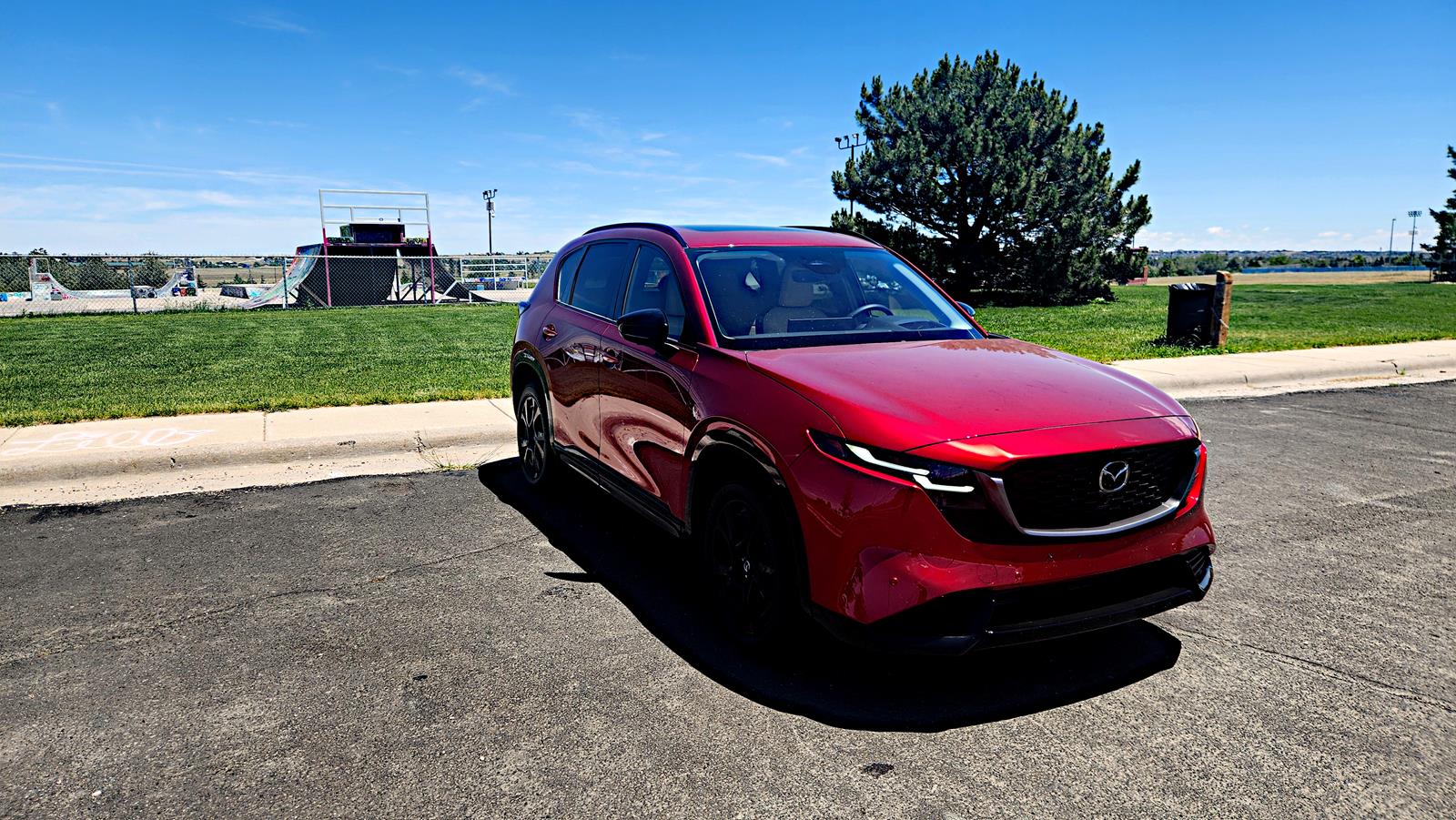
In automotive, every year brings another “all-new” crossover promising more screens, more software, and fewer buttons. Amid that march towards touchscreen dystopia sits the 2026 Mazda CX-5, a compact SUV that reminds us a well-executed design doesn’t suddenly become obsolete because the calendar changed.
Mazda has finally given its best-selling crossover a thorough redesign for 2026. But rather than chasing every trend, the company has doubled down on the qualities that made the CX-5 a favorite in the first place. It’s still one of the most engaging compact SUVs to drive, but now it wraps that experience in more interior space, updated technology, and a more refined look.
Mazda has clearly figured out the market difference between the CX-5 and its one-time replacement, the CX-50. Where the CX-50 jumps at an adventure-seeking persona, the CX-5 is more mature and refined.
The CX-5 has grown a bit. The wheelbase stretches a bit longer, overall dimensions have increased, and the proportions are cleaner without abandoning Mazda’s familiar Kodo design language. It looks athletic without trying too hard, avoiding the exaggerated creases and oversized grilles that have become fashionable elsewhere.
“It’s handsome rather than flashy” is my best description for it.




Under the hood is a familiar face. Mazda continues with its naturally aspirated 2.5-liter Skyactiv-G four-cylinder as the standard engine, producing enough horsepower to keep daily driving pleasant without pretending it’s a sports car. Turbocharged versions remain available for buyers who appreciate a stronger shove when merging onto fast-moving highways.
The naturally aspirated engine won’t pin anyone to their seatbacks, but it delivers power progressively and predictably. The turbo, on the other hand, transforms the CX-5 into one of the quicker entries in the segment without sacrificing refinement (just fuel economy).
Equally important is what Mazda didn’t do.
The company continues using a conventional six-speed automatic transmission rather than joining the CVT club. That’s good news for anyone who prefers their drivetrain to feel connected instead of resembling a loud blender trying to puree fruit. Gear changes are smooth, well timed, and allow the engine to stay in its sweet spot without endless droning under acceleration.
On the road, the CX-5 continues to distinguish itself. Most compact crossovers are competent. The Mazda is enjoyable.
Steering is direct, body roll is well controlled, and the suspension strikes an excellent balance between comfort and composure. You won’t mistake it for a sports sedan, but on a winding two-lane road it feels lighter and more eager than A-to-B-focused competitors like the Toyota RAV4 or Honda CR-V.
Mazda has long understood something many manufacturers seem to forget: drivers can appreciate good dynamics even during mundane commutes.
Ride quality has improved as well. The redesigned chassis absorbs broken pavement with more confidence than before while maintaining the taut character that defines the brand. Highway cruising is quiet, wind noise is subdued, and road noise has been reduced enough that conversations don’t require raised voices.
Inside, the biggest improvements become apparent. Previous CX-5 models drew criticism for rear-seat space and cargo capacity. Mazda has addressed both. Rear passengers have noticeably more legroom, ingress and egress are easier thanks to wider door openings, and the cargo area now competes more evenly with segment leaders. Lengthening the wheelbase made all this possible.
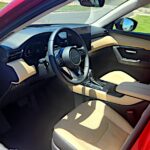
Mazda continues punching above its weight when it comes to interior materials. Soft-touch surfaces appear throughout, stitching is tasteful rather than excessive, and the overall design avoids the temptation to overwhelm occupants with giant screens and glossy black, fingerprint-attracting plastic. Instead, everything feels thoughtfully arranged.
The updated infotainment system finally catches up with the competition. A larger touchscreen replaces the previous interface, wireless Apple CarPlay and Android Auto are standard, and response times are dramatically quicker. Physical controls remain for the climate system, a decision deserving of great applause in an era where some seem intent on making simple temperature adjustments require software tutorials.
Safety technology has also received meaningful updates. Adaptive cruise control, lane-centering assistance, blind-spot monitoring, rear cross-traffic alert, and automatic emergency braking all operate smoothly without becoming overly intrusive. The systems are there when you need them rather than constantly reminding you they exist.
Fuel economy remains respectable, though not class-leading. That’s largely because Mazda continues prioritizing driving feel over squeezing every last fraction of a mile per gallon from the powertrain. Buyers looking solely at efficiency numbers may find hybrid competitors more appealing, but they’ll also sacrifice the responsiveness that makes the CX-5 stand out.
Pricing remains competitive, particularly considering the premium feel of the cabin. The CX-5 often feels like it belongs in the entry-level luxury segment, yet it undercuts many European rivals by thousands of dollars while offering lower ownership costs and a stronger reputation for long-term reliability.
That’s been Mazda’s quiet superpower for years. It builds vehicles that make owners feel like they bought something a little nicer than the price tag suggests.
The 2026 Mazda CX-5 refines nearly every aspect of an already excellent package. It’s more spacious, more comfortable, quieter, and more technologically current while preserving the engaging driving character that has always separated it from the crowd.
In a market overflowing with competent appliances disguised as SUVs, the CX-5 still manages to inject a bit of personality into the daily commute.


