
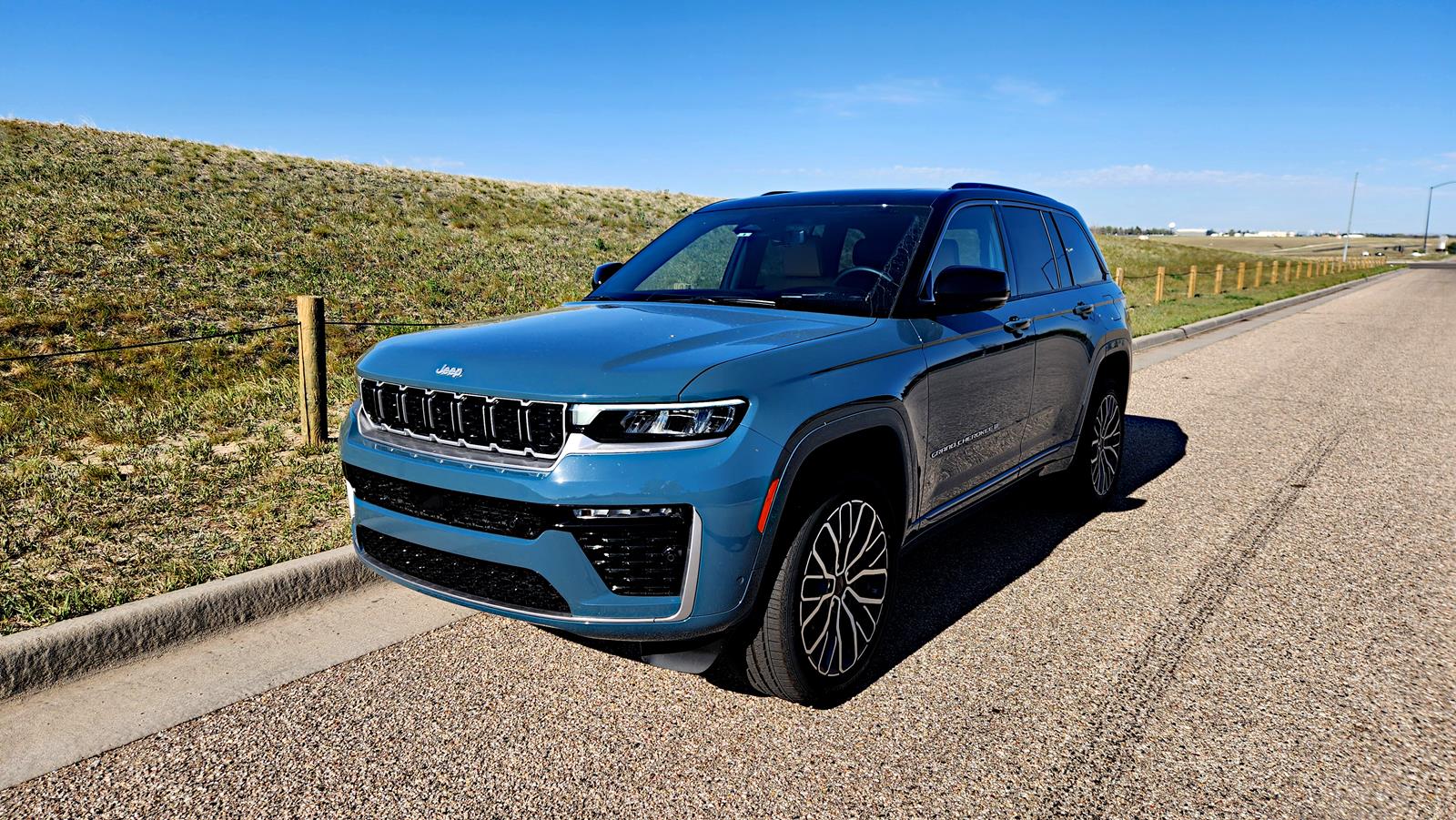
The Jeep Grand Cherokee has spent more than three decades doing something few SUVs have managed to pull off: being equally at home in suburban driveways and halfway up a mountain trail. That’s a balancing act that has earned it a loyal following, and for 2026 Jeep has wisely resisted the urge to reinvent the formula. Just as the V8 eventually went, so has the V6 now gone.
The refresh points and headlines are straightforward. The exterior gets a cleaner face, the cabin receives a welcome technology update, and under the hood the long-serving Pentastar V6 bows out for a new turbocharged four-cylinder. That last change is easily the biggest story, and it’s one that will probably divide Jeep faithful.
It works better than you might expect, though, so judge not until you’ve driven one.
Familiar, But Sharper
If you parked a 2025 Grand Cherokee next to the 2026 model, most people wouldn’t immediately notice the difference. That’s intentional on Jeep’s part for sure.
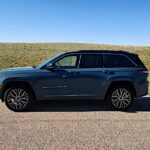
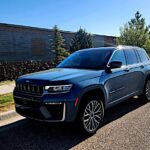
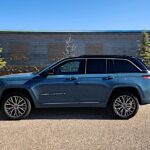
The revised seven-slot grille is a little cleaner, the lighting has been updated, and the bumpers have been reshaped just enough to modernize the look without losing the Grand Cherokee’s unmistakable profile. It remains one of the better-looking midsize SUVs on the road. It’s just boxy enough to look capable without drifting into cartoonish off-road cosplay.
Interior Improvements That Matter
Inside is where most will notice the refresh. And it’s mostly good updates for the every day.
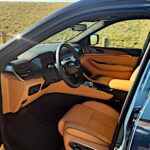
The larger 12.3-inch infotainment display feels overdue, but it brings the Grand Cherokee into line with the competition. Jeep has also refined the cabin materials and updated some trim pieces, while higher trims continue to offer genuinely premium accommodations that wouldn’t feel out of place wearing a luxury badge.
Seat comfort remains among the best in the segment. Long highway drives disappear into the cushions, and visibility is generally excellent despite the SUV’s substantial proportions. Cargo room remains competitive, rear-seat passengers have plenty of space, and the Grand Cherokee still manages to feel rugged without sacrificing everyday usability.
Goodbye Pentastar
The elephant in the room is the engine. After years of dependable service, Jeep has retired the naturally aspirated 3.6-liter Pentastar V6 from most trims in favor of a new 2.0-liter Hurricane turbocharged four-cylinder producing 324 horsepower and 332 pound-feet of torque. On paper, that’s a substantial improvement over the outgoing V6 while maintaining a stout 6,200-pound towing capacity.
And in practice?
Acceleration is noticeably stronger. The turbo engine takes a second to wind up, but develops its torque early, making the Grand Cherokee feel lighter than it actually is around town. Passing on two-lane highways requires less planning, merging is effortless, and fuel economy sees a modest improvement as well.
Unfortunately, physics and acoustics still exist.
The new engine never sounds particularly refined. Under heavy throttle it produces a coarse growl that reminds you there are only four cylinders doing the work. It’s not unpleasant so much as unexpected in an SUV that otherwise feels fairly upscale.
The eight-speed automatic also occasionally seems unsure of itself. Downshifts can hesitate, especially when quick acceleration is requested, dulling what is otherwise an impressive powertrain. It’s a reminder that the Grand Cherokee is not a sport-based SUV, but a road-based off-roader. If you know what I mean.
Still One of the Best Off Pavement
Thankfully, Jeep hasn’t forgotten what made the Grand Cherokee famous.
Available Quadra-Trac and Quadra-Drive four-wheel-drive systems, Selec-Terrain drive modes, optional air suspension, and generous ground clearance mean this remains one of the few midsize SUVs that genuinely deserves its off-road image.
Most competitors can handle gravel roads. The Grand Cherokee can tackle trails that would have crossover owners nervously checking their insurance policies. That’s still a meaningful distinction.
The Grand Cherokee doesn’t compete with the Wrangler, obviously, but it’s god a lot more off-pavement cred than a Grand Highlander or a Palisade does.
On-Road Manners
Despite its trail credentials, the Grand Cherokee spends most of its life on pavement, where it’s generally composed and comfortable. Ride quality is excellent, soaking up broken pavement with little drama. Wind noise is well controlled, and highway cruising remains one of the Jeep’s greatest strengths.
Handling, however, is best described as confident rather than athletic.
Body roll reminds you this is still a fairly tall SUV, and steering favors stability over enthusiasm. That’s perfectly appropriate given the Grand Cherokee’s mission, but drivers expecting European-style precision should temper expectations.
Wrapup
The 2026 Jeep Grand Cherokee isn’t revolutionary and it didn’t need to be.
Instead, Jeep focused on modernizing an SUV that already occupied a sweet spot between mainstream family transportation and legitimate off-road capability. The updated styling keeps it fresh, the cabin technology finally catches up to the competition, and the new Hurricane engine delivers the performance many buyers have been asking for—even if it sacrifices some refinement along the way.
If your adventures involve little more than Costco parking lots, there are quieter and arguably more polished choices from Toyota, Honda, or Hyundai.
But if your weekends occasionally involve dirt roads, campsites, towing a boat, or otherwise going outside of suburbia, the Grand Cherokee continues to occupy a niche that few competitors truly challenge.


