
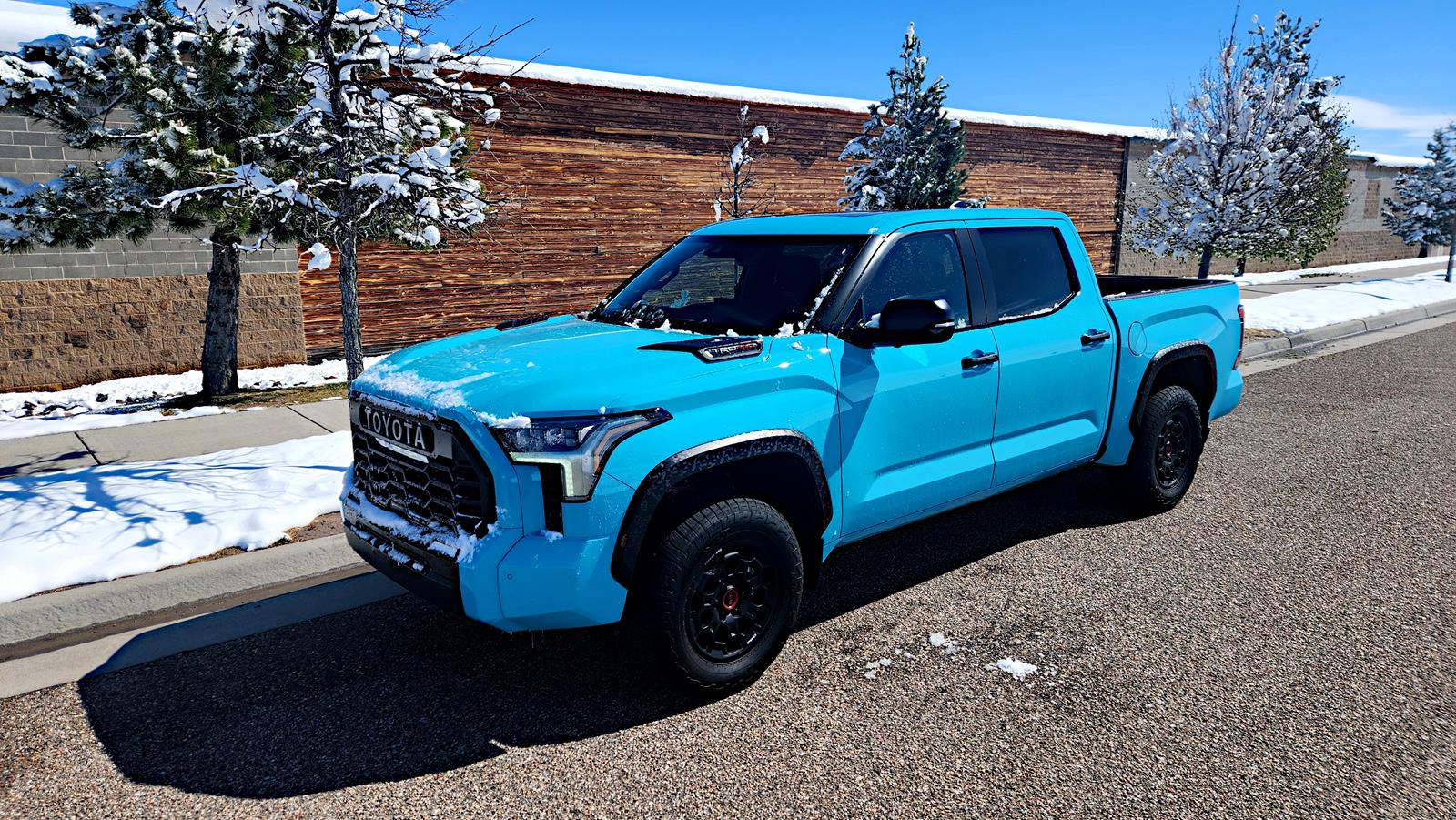
If there was ever a truck built for someone whose weekend plans involve a map with more contour lines than street names, it’s the 2026 Toyota Tundra TRD Pro. Toyota has spent the past few years refining its flagship off-roader, and for 2026 it feels like the engineers finally stopped trying to convince truck buyers that “hybrid” means “Prius with a bed.”
Instead, the Tundra TRD Pro is just a fast, capable, expensive off-road pickup that happens to use electrons to make more torque rather than save the planet. Toyota will let truck buyers figure out where this one fits.
Looks Like It Wants to Climb Something
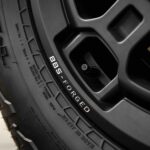
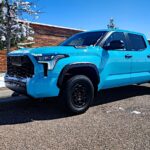
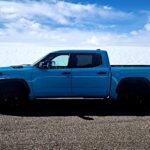
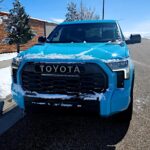
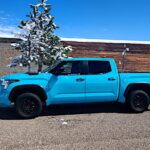
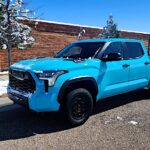
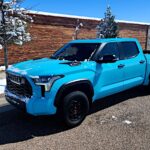
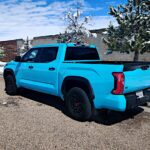
Toyota’s TRD Pro formula hasn’t changed much. The massive heritage-style TOYOTA grille still dominates the front end. Amber marker lights remind everyone behind you that, yes, this thing costs more than many luxury SUVs. The forged BBS wheels wrapped in Falken Wildpeak all-terrain tires look purposeful instead of decorative, and the truck rides higher thanks to TRD-tuned FOX shocks and a modest front lift.
It’s aggressive without looking like it was designed by an energy drink marketing department. That’s pretty rare for an off-road-focused pickup.
Hybrid Power for Muscle Rather Than MPGs
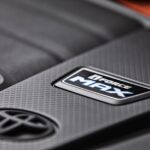
Power comes from Toyota’s now-familiar i-Force Max hybrid system. That pairs a twin-turbocharged 3.4-liter V6 with an electric motor for a combined 437 horsepower and a stump-pulling 583 lb-ft of torque. Power goes through a 10-speed automatic to a full-time four-wheel-drive system.
There’s no V8 and some people are still upset about it. Those people just need to drive one of these. They probably won’t notice the not-a-V8 thing after the first hard launch.
The electric motor completely changes how this truck feels. Peak torque arrives almost instantly, making the Tundra leap away from stoplights with surprising enthusiasm for something weighing three tons.
It’s not sports-car quick. It is “merge into interstate traffic while towing a camper without breaking a sweat” quick. That’s the kind of performance truck owners actually use.
Then there’s all that Racing Development gear. Plenty of pickups wear aggressive tires and call themselves “off-road.” The TRD Pro actually backs it up.
FOX internal bypass shocks soak up washboard roads while keeping your kidneys intact. The suspension keeps impressive composure over rocks, ruts, and high-speed dirt roads, while Toyota’s Multi-Terrain Select and Crawl Control make difficult terrain a near non-issue.
It’s remarkably easy to drive quickly over rough surfaces. Perhaps too easy.
You start believing you’re an off-road hero until physics gently reminds you that this is still a full-size pickup with a long wheelbase. Fortunately, Toyota built in enough suspension travel and underbody protection that your ego usually survives.
Better on Pavement Than It Should Be
One of the pleasant surprises is how civilized the Tundra TRD Pro has become. Earlier TRD Pro trucks tended to remind you every minute that they were designed for dirt. This one feels comfortable during the daily.
The rear coil-spring suspension continues to be one of the Tundra’s biggest advantages over traditional leaf-springs. Ride quality is composed, body control is good, and highway cruising is quiet enough that passengers don’t have to yell over tire noise.
Well…mostly.
If you opt for Toyota’s new TRD Performance Package, things get a bit louder. And even without that, there’s no masking the knobby tires on pavement.
The Perfromance Package bumps output to roughly 466 horsepower through revised tuning, adds dual airboxes and a TRD cat-back exhaust. And introduces IsoDynamic seats borrowed from the Tacoma TRD Pro, but this time in a full-sized truck and sized to fit. It’s entertaining around town, although the extra exhaust note can become tiring during long interstate drives.
Sometimes louder isn’t automatically better.
Interior Finally Feels Worth the Price
Toyota’s interiors have occasionally felt like someone forgot the budget meeting ended. But not anymore.
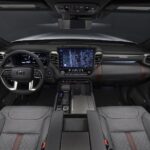
The 14-inch touchscreen is crisp, responsive, and finally competitive with the rest of the segment. Wireless Apple CarPlay and Android Auto work as expected, while physical controls remain where they belong. These are for things you’ll actually use while driving.
The seats are supportive enough for long road trips, visibility is excellent by modern truck standards, and the CrewMax cabin remains one of the roomiest in the class.
Storage is abundant. Cupholders appear to have been designed by someone who understands Americans. Mission accomplished.
Fuel Economy: Better Than Expected, Still a Truck
EPA estimates land around 18 mpg city and 20 highway for the TRD Pro. That’s respectable considering the power, the tires, and the aerodynamic profile of what is essentially a brick carrying another brick. In the real world, most people should see something close to those numbers. The hybrid isn’t really about maximizing fuel economy.
The Competition
The Ford F-150 Raptor is faster. The Ram 1500 RHO is smoother. GM’s Silverado ZR2 and Sierra AT4X arguably split the difference between comfort and capability. But the Toyota continues to occupy its own niche.
It isn’t trying to be the highest-horsepower truck. It isn’t trying to be the fanciest. It simply wants to go nearly anywhere with minimal drama while keeping its occupants comfortable.
The 2026 Toyota Tundra TRD Pro is no longer just Toyota’s answer to everyone else’s off-road truck. It’s one of the segment’s best all-around pickups.
It combines genuine trail capability with everyday livability, delivers massive low-end torque, rides exceptionally well, and finally has an interior worthy of its price tag. At a starting MSRP of about $72,500, it’s certainly not cheap, but neither are its direct rivals.
The only lingering question is long-term confidence after the engine issues that shadowed earlier models. Assuming those concerns remain firmly in Toyota’s rearview mirror (and I think they have), the TRD Pro stands out as one of the most complete off-road half-ton trucks you can buy.
And perhaps that’s the biggest compliment. The hybrid system isn’t the story anymore. The truck is.


