
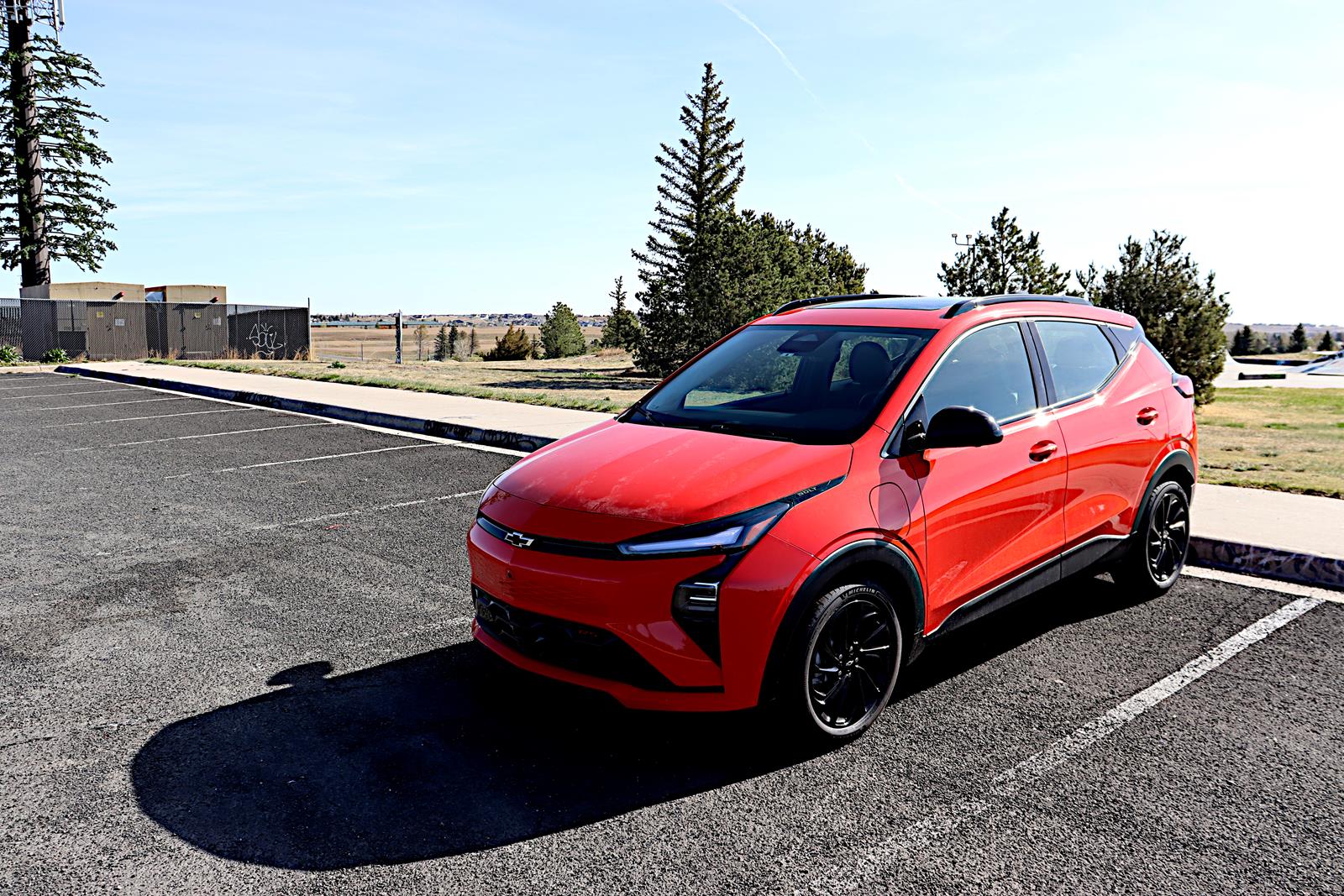
There are few automotive ironies as rich as General Motors killing off one of the most successful affordable EVs in America, only to bring it back a few years later because customers wouldn’t stop asking for it. Yet here we are. But it’s only for one year.
The 2027 Chevrolet Bolt returns after what can best be described as a corporate timeout. GM discontinued the original Bolt just as it was finally past its growing pains and hitting its stride. And then spent the next couple of years listening to customers, dealers, and accountants collectively realize that maybe having a genuinely affordable electric vehicle wasn’t such a bad idea after all. The result is the new Bolt, a hatchback that looks familiar, costs less than most new cars, and might be the smartest EV the company has produced thus far.
The Bolt’s secret weapon is realism.
Same Idea, Better Execution
At first glance, the new Bolt doesn’t appear dramatically different from the outgoing model. That’s intentional.
Chevrolet wisely avoided the temptation to turn the Bolt into another bloated crossover with fake off-road aspirations. Instead, it remains a practical hatchback with upright proportions, easy entry and exit, and a footprint that’s actually manageable in parking lots.
The styling has been cleaned up considerably. The front end is sharper, the lighting signatures are more modern, and the RS trim adds just enough visual attitude without going in for a fully-overdone, six inches of foundation, ready for TikTok makeover.
More importantly, the Bolt retains the practicality that made the original such a hit. There’s usable rear-seat room, a large hatch opening, and cargo capacity that makes most compact sedans envious.
Finally, Charging That Doesn’t Feel Like Punishment
The biggest improvement is one that EV owners will appreciate immediately. The previous Bolt’s DC fast charging capability was, frankly, terrible. Waiting around while other EVs came and went wasn’t exactly a premium ownership experience. The 2027 model changes that.
Chevrolet says the new Bolt can charge from 10 to 80 percent in about 25 minutes with peak charging rates exceeding 150 kW. That’s more than twice as fast as the previous generation and transforms the Bolt from a city commuter into a genuinely viable road-trip machine. It also comes standard with a native NACS charging port, meaning access to Tesla’s expansive Supercharger network is built right in. Just be aware that network membership is proprietary, so you’ll have to get set up first. It’s a small, but visible annoyance.
Still, that’s arguably the most important upgrade on the entire vehicle.
Range That Hits the Sweet Spot
The EPA-estimated range lands at 262 miles. Some EV shoppers will immediately complain that it isn’t 300 miles. Those same shoppers probably drive 35 miles a day and haven’t taken a road trip since the Obama administration.
For everyone else, 262 miles is more than enough. It’s a practical number that keeps battery costs under control while delivering all the range most drivers actually need.
Like I said, the Bolt’s secret weapon is realism. Instead of chasing headline-grabbing specifications, Chevy focused on delivering a usable package at a price ordinary people can afford.







Interior: Much Better Than Before
Inside, Chevrolet has made substantial improvements. The dashboard is cleaner and more modern, centered around an 11.3-inch infotainment screen and an 11-inch digital instrument cluster. Storage has improved thanks to a column-mounted shifter. And the overall layout feels more spacious than before. Available features include wireless charging, ventilated seats, heated seats, a panoramic roof, and GM’s excellent Super Cruise hands-free driving system.
There is one catch. Because there’s always at least one.
Like other recent GM products, the Bolt relies on Google’s built-in software ecosystem rather than offering traditional smartphone mirroring. For some buyers, that will be a non-issue. For others, the absence of Apple CarPlay and Android Auto remains an unnecessary self-inflicted wound. The upside is that my Bluetooth connection to stream music never faltered. Something that not all other makes can claim. The downside is that pretty much everything else is Chevy-only and that might irk some people.
But probably not enough of them to make much of a dent in GM’s sales figures. Most of us buy a car and drive it for years, so getting used to this is a matter of a few days. While a few might, ultimately, have long-term regret over not having access to Auto or CarPlay, GM is betting that most will not. And that’s probably a safe bet.
On the Road
The Bolt remains one of the better-driving affordable EVs on the market. It’s relatively light weight when compared to many competitors and that pays dividends in responsiveness and efficiency. I felt the Bolt to be more engaging and composed than the latest Nissan Leaf or Toyota bZ. Especially in brake feel and handling engagement. Rear-seat room was also a strong point.
The regenerative braking system has been improved as well, providing smoother transitions between regen and friction braking. That’s slowly going away as a common complaint among EVs, but is only now reaching cars at this price point.
The Real Story: Price
The headline remains affordability. The Bolt starts at just over $30,000 after delivery fees. Chevrolet positions the Bolt as the EV with the most range available at about $30k. In a market where many electric vehicles have wandered into luxury-car territory, the Bolt’s pricing feels almost rebellious. For context, many compact gasoline crossovers now cost nearly as much.
That’s a remarkable place for an EV to be.
Sum-up
The 2027 Chevrolet Bolt succeeds because it understands something many automakers have forgotten: not every EV buyer wants a luxury experience, a 500-horsepower powertrain, or enough battery capacity to power a small city. Most people just want reliable transportation that doesn’t cost a fortune. They want realism.
The new Bolt delivers on that. It improves the old model’s biggest weaknesses by adding modern charging capability, upgrades the interior, and keeps pricing within reach of normal buyers. It won’t wow anyone with exotic technology or outrageous performance numbers, but it aims at a market that doesn’t care about that stuff.
The original Bolt helped prove affordable EVs could work. The 2027 Bolt proves they still can.
Now for the downside: Chevrolet has said that the 2027 Bolt will be the one and only model year for this one. It won’t continue into 2028. Why? Costs and the market itself. Electric vehicles just don’t yet sell well enough to justify themselves.
I suspect that the Bolt will take off, though, and might surprise General Motors into longer-term production. Unless the company has something up its sleeve after this. Bolt II: the Remaster? Who knows.


